



09/06/2020 SOURCE: news.knowledia.com
A team of researchers affiliated with a host of institutions in the U.S. has investigated the yield potential of wheat grown on controlled-environment vertical farms, finding it higher than expected. In their paper published in Proceedings of the National Academy of Sciences, the group describes modeling indoor vertical wheat farming and what their models showed.
The yield potential of wheat grown in controlled-environment vertical farms
-
(0)
-
Bookmark
- Comments. (0)
-
(0)
-
Bookmark
- Comments. (0)
 John LaRose Jr.
Topics: Cotton, Agriculture US, Pesticides, Agriculture Global, Economics, Pest Control, Research,

Research recommends integrated approaches to managing reniform nematodes in cotton
While there are many pests affecting cotton, the reniform nematode is one the most damaging, with the ability to cause annual losses of approximately $33 million within the Mid-Southern United States. Farmers struggle to manage this pest as commercially available resistance is not widespread and a limited number of products are commercially available for use in suppressing the reniform nematode.
-
(0)
-
Bookmark
- Comments (0)
John LaRose Jr.
Topics: Soil Health, Agriculture US, Crop Consultant, Agriculture Global, Education U.S. MidWest, Education U.S. West, Conservation/Tillage, Economics,

Study seeks to increase adoption of soil conservation practices
Farmers who make soil health a priority are more likely to rotate three or more crops and to graze livestock on cropland, according to a survey of producers in South Dakota, North Dakota and Nebraska.
-
(0)
-
Bookmark
- Comments (0)
John LaRose Jr.
Topics: Corn/Maize, Soil Health, Soybeans, Agriculture US, Education U.S. MidWest, Economics, Research, Climate Change,

Diversifying crop rotations improves environmental outcomes while keeping farms profitable
Diversifying crop rotations can reduce negative environmental and health impacts and maintain profitability.
-
(0)
-
Bookmark
- Comments (0)
John LaRose Jr.
Topics: Rice, Economics, Research, World Hunger, Climate Change, World Population,

Climate change could increase rice yields
Rice is the most consumed staple food in the world. It is especially common in Asia, where hunger concerns are prevalent.
-
(0)
-
Bookmark
- Comments (0)
John LaRose Jr.
Topics: Rice, Economics, Ag Asia / Pacific, World Hunger, Ag Africa, World Population,

The quality of Nigerian home-grown rice is poor: here's why
The Nigerian ministry of agriculture and rural development needs to focus on the adoption of modern rice processing techniques.
-
(0)
-
Bookmark
- Comments (0)
09/06/2020 SOURCE: economictimes.indiatimes.com
The govt has set a target of doubling farmer income by 2024. It is taking various measures and a multi-pronged approach to support farmers — right from sowing to harvest to sales. As part of its stimulus package, the govt also announced an investment of Rs 1.5 lakh cr to build farm-gate infrastructure and support logistics needs for farmers and related communities.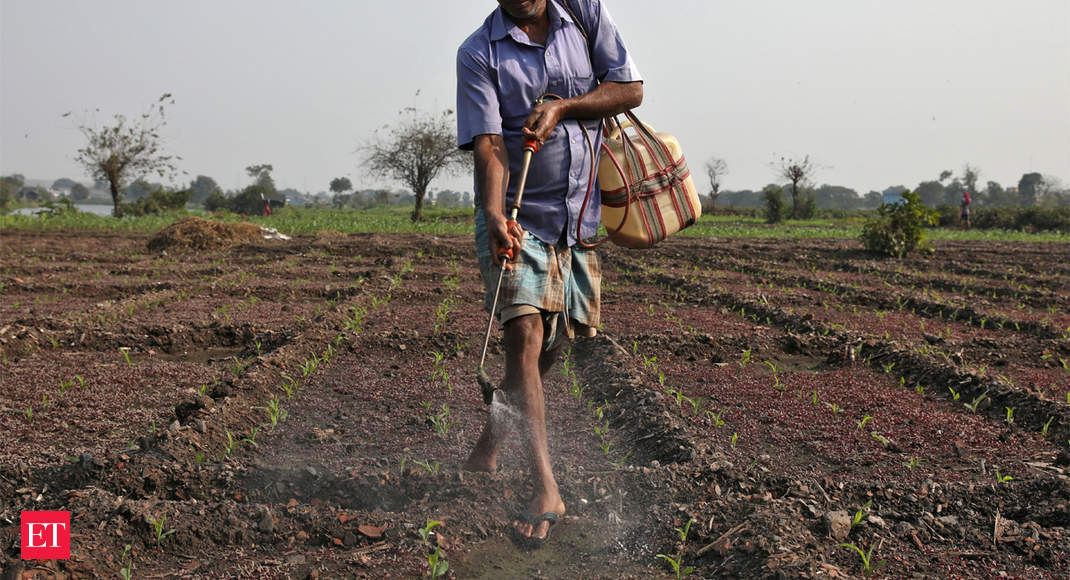
View: Empowering the Indian farmer
-
(0)
-
Bookmark
- Comments. (0)
09/06/2020 SOURCE: www.csrwire.com
RESEARCH TRIANGLE PARK, N.C., Sep. 03 /CSRwire/ - The Soil Health Institute (SHI), the nonprofit organization charged with safeguarding and enhancing soil health, has been awarded $3.25 million from the U.S. Department of Energys Advanced Research Projects Agency-Energy (ARPA-E). The funds will be...
Soil Health Institute Awarded $3.25 Million from ARPA-E to Develop Soil Carbon Measurement and Monitoring System
-
(0)
-
Bookmark
- Comments. (0)
09/05/2020 SOURCE: bizwest.com
LONGMONT — Colorado-based health-food chain Natural Grocers, also known as Vitamin Cottage Natural Food Markets Inc.(NYSE: NGVC), and nonprofit Beyond Pesticides are removing synthetic pesticides and fertilizers in Longmont’s Roosevelt Park Memorial Rose Garden. Beyond Pesticides advocates for public health and environmental protection and works with partners in the U.S. The project, operating under the “Ladybug Love Your Neighborhoods” campaign, will replace current gardening practices with organic products. Pamela Lipshitz, director of public relations for Natural Grocers, said work in Roosevelt Park has already begun. The partnership plans to work with other communities and parks on projects that will later be announced. Lipshitz said Beyond Pesticides works with community leaders to identify public spaces, including parks, school grounds and playing fields. From there, site evaluation and training are provided for grounds-maintenance staff and service providers on management practices. There’s also educational resources on organic gardening. Natural Grocers said the partnership worked with Longmont city parks and natural resources director David Bell for the Roosevelt Park project. Gardening practices are a small part of a month-long effort from the partnership in honor of September’s Organic Harvest Month. The month was implemented in the early ’90s by the Organic Trade Association to promote organic food and agriculture in the U.S. through regional and local events. Natural Grocers wants to raise $100,000 for Beyond Pesticides this month. In stores, $1 from every purchase of a reusable limited-edition “Organic Month Headquarters” shopping bag will go toward the nonprofit organization. Additionally, customers may donate $1, $5 or $10 at Natural Grocer stores toward Beyond Pesticides. The grocery chain will have educational videos throughout the month on organic and environmentally friendly practices. Every week, Natural Grocer’s organic-farm vendors will be featured on its social media wi...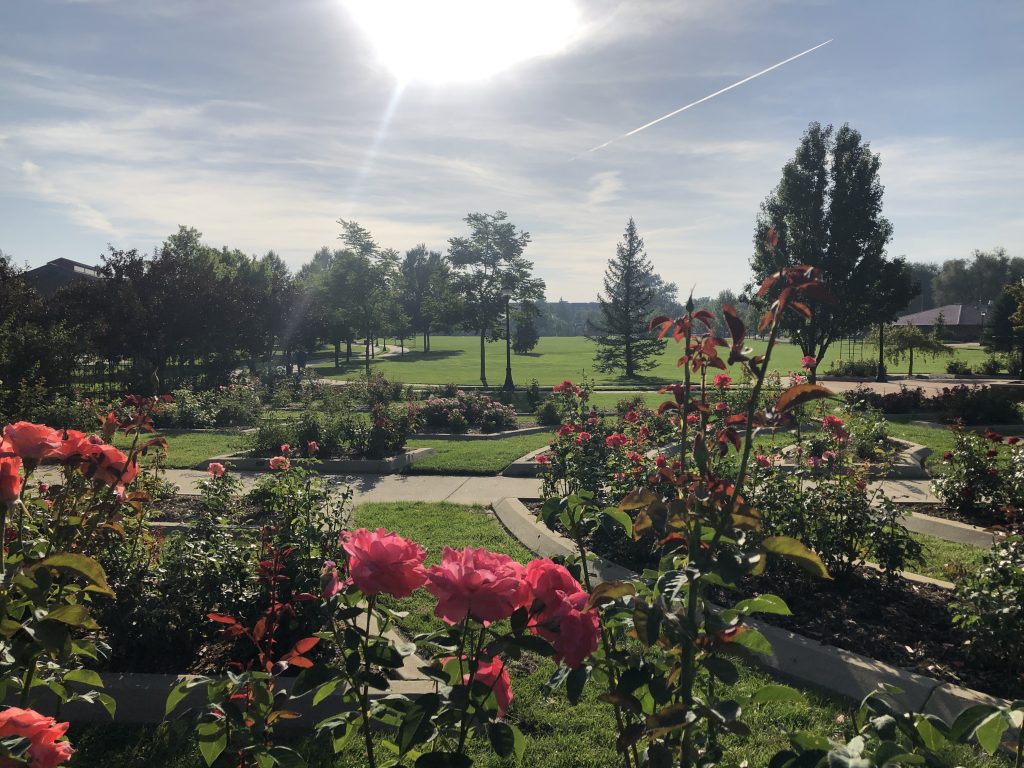
Natural Grocers kicks off organic-farming campaign with Longmont’s Memorial Rose Garden
-
(0)
-
Bookmark
- Comments. (0)
Advertisement